
Fusina (Venice) to Athens (Piraeus)
- 24 Aug ‘27
- 19 nights
- Departing from Fusina (Venice)
- Silver Nova

-
Inside price fromCall for price
-
Outside price fromCall for price
-
Balcony price fromCall for price
-
Suite price fromCall for price
YOUR ITINERARY
Fusina (Venice) - Koper - Rovinjo, Croatia - Zadar, Croatia - Split, Croatia - Dubrovnik, Croatia - Katakolon (Olympia), Greece - Gythion, Greece - Milos - Athens (Piraeus), Greece - Santorini, Greece - Heraklion, Crete, Greece - Milos - Naousa - Rhodes, Greece - Kusadasi, Turkey - Mykonos, Greece - Athens (Piraeus), Greece
Losing none of its allure over the years, this floating...
Losing none of its allure over the years, this floating city of canals, bridges and masks is a place of eternal beauty and enduring elegance. The lagoon of more than 100 islands is a heavenly sight, transporting visitors on a journey through time – from its Roman inception, through centuries of trade to the modern face we see today. Navigate Venice’s sparkling waterways by romantic gondola, or on cruises along wide canal boulevards. Span the Grand Canal over its iconic original crossing, the Rialto Bridge, which – with its parade of tiny shops – gives some of the city’s most endearing views. If the crowds unsettle you at any point, take two turns away from the main thoroughfares to find peace alone, amid the city’s labyrinth of tiny streets. Hurry to Piazza San Marco to be immersed in Venice’s elegant glory. Basilica San Marco transports you back to the wealthy days of the Doges, who ruled for over 1,000 years. Initially their private chapel, it’s now decorated with beautiful Byzantine mosaics. Nearby the Campanile di San Marco bell tower offers views over the higgledy-piggledy rooftops of times gone by. Just a hop skip and a jump around the corner is the Doge’s Palace, where the levels of opulence ramp up even further. Justice was meted out in this stunning Palace, with the guilty walking to the cells across the covered Bridge of Sighs. Vaporetto trips to local islands offer even more adventures to float your boat, whether it’s Murano with its world-famous glass, Torcello with its amazing Cathedrals, or Burano with its handmade lace and delightfully colourful painted houses.
Koper is a port city in Slovenia, on the country’s ...
Koper is a port city in Slovenia, on the country’s Adriatic coastline. Its medieval old town centers around Titov Trg, a square with Venetian-influenced landmarks such as the Praetorian Palace and a Gothic-style loggia, while nearby Da Ponte Fountain is a replica of Venice’s famed Rialto Bridge
The first documented mention of Rovinj was in the 5th cent...
The first documented mention of Rovinj was in the 5th century. However, it is very likely that Rovinj is much older, emerging somewhere at the turn of the 3rd and the 4th centuries. During this period, Istria was occupied by the Romans who stayed there until 476. Later came the Ostrogoths, Franks and the Venetians. During the Venetian times, Rovinj was developing into a strong fishing, shipbuilding and maritime center, especially in the 17th and 18th century when they had the precedence over Istria. At the time that the town walls were secured, the town started to expand to the mainland and in 1763 the channel between the mainland and the island was covered up and Rovinj became a peninsula.
In 1797 the Venetian republic lost its power and for a short time and Istria fell under Austrian and then under Napoleon’s rule.
In 1813, Rovinj became part of the Austor-Hungarian Empire and a period of industrial and urban development started.
Rovinj fell to fascist Italy until the end of World War II and in the second half of the 20th century was a part of Yugoslavia, as was all of Croatia, until 1991.
In the past 40 years Rovinj has developed from a fishing village into a real tourist center thanks to its picturesque surroundings, its pleasant Mediterranean climate and its cultural-historical values.
Croatia’s Capital of Cool, Zadar is a dazzling...
Croatia’s Capital of Cool, Zadar is a dazzling mesh of influences and creativity. Romans founded the city before the Venetians, Austrians, French and Italians all had their say, leaving a wealth of architectural interest. Glorious turquoise-water beaches and heavenly waterfalls also lie within easy reach of this energetic city of festivals and outdoor fun. See the old town, with its robust city walls, boasting decorative stone gateways and marble streets. View less
The church of St Donatus, was built from stones pillaged from the Roman forum, while Zadar Cathedral – Dalmatia’s biggest – stands among the many architectural treats of this city, which was once an impenetrable stronghold of Venice’s republic. Head for the ‘pillar of shame’ with its chains to humiliate the criminals of a bygone time – or succumb to the tempting treats of shopping in the market. The sparkling Adriatic’s waters calls you, and Kolovare Beach is a mere ten-minute stroll from the old town. A day trip to Kornat National Park – which incorporates the Zadar Archipelago’s immaculate scattering of beach-fringed islands – or to the divine waterfalls of Plitvice Lakes National Park, will introduce you to more of Croatia’s thrilling natural beauty. The sea truly does sing here in Zadar, thanks to a unique waterfront artwork, which encapsulates the city’s playful spirit. Designed to make music when the waves wash over it, the ebb and flow of the Adriatic, plays the Sea Organ instrument like a maestro. Not far away, the Monument to the Sun is a 22-metre-wide disc, which gathers the sun’s rays during the sunny days, and releases the solar energy in the form of a magical light show after dark. Sit and admire the artwork coming to life, as one of the city’s famous sunsets plays out before you.
Split is a busy port with numerous ferries operating to and f...
Split is a busy port with numerous ferries operating to and from nearby islands. It is also a popular resort with beaches, pleasant promenades and good hotels. Venetian Gothic and Renaissance houses and several medieval churches add architectural interest. As a major cultural center, Split does not lack in museums and art galleries. However, the city’s principal attraction is Diocletian’s Palace. It occupies an area of 34,680 square yards and was constructed to serve as a residence and a fortified military camp. By the Middle Ages, the palace had been enclosed within a strong wall with square corner towers, enclosing a town with narrow house-lined alleys. As the city grew, people gradually moved outside the walls and the city center shifted westward.
Croatia’s crowning glory rears up vertically from the...
Croatia’s crowning glory rears up vertically from the tranquil waters of the Adriatic, and Dubrovnik’s daunting fortresses town is a truly imposing sight to behold. Encircled by chunky stone walls so thick and dramatic they could have been purpose-built as a film set, this city’s unmatched old town is the setting for countless films and shows – from Star Wars to Robin Hood, Game of Thrones and every production in-between seeking a truly authentic medieval flavour.
This fantasy fortress’s walls – which are no less than 12-metres thick at places – are certainly not just for show, however. They kept Dubrovnik safe when it was a maritime republic and they were besieged as recently as 1991, when Serbian and Montenegrin forces attacked, as Yugoslavia broke apart. Fully restored now, the stone streets of the city take you through a beautiful mosaic of architectural splendour, baroque churches and splashing fountains. Tapering alleys rocket up from the central boulevard of Stradun, offering spectacular views down, but you’ll need to walk the city walls to appreciate the fortress city’s full scale. Banking up sharply to the rear, you can gaze across an ocean of terracotta roofs and church spires, clamouring together before the sparkling Adriatic. Visit the neighbouring fort of Lovrijenac, for another perspective, or swing up to Srd fortress’s glorious panorama on a cable car. Dubrovnik’s streets are crammed with eateries and candlelit tables, where couples splash wine into glasses and enjoy gnocchi mixed with creamy truffle sauces. Nearby beaches like Banje are also close by, and hidden bays reward the intrepid who venture out beyond the old town. Take sunset drinks to sit back and watch as flotillas of sea kayaks roll by, or sail on the pristine waters to explore island gems like Lokrum – where peacocks are the only permanent residents.
The tiny port of Katakolon serves primarily as the starting ...
The tiny port of Katakolon serves primarily as the starting point for an excursion to the archaeological site of ancient Olympia. Adjacent to the port is the small village of Katakolon with a few souvenir shops and typical local restaurants. Ancient Olympia, the great Panhellenic sanctuary, is located 21 miles from the port.
The site of ancient Olympia spreads out at the foot of wooded Mount Kronos. Excavations began in 1875; they are considered one of archaeology’s great achievements. A direct consequence was the revival of the Olympic Games by Baron Pierre de Coubertin.
Today’s visitors walk among the ruins and reflect on their significance. Don’t miss the site where the Olympic flame is lit even today for the modern games.
One of the most beautiful parts of this region of the Pe...
One of the most beautiful parts of this region of the Peloponnese is the plain of Laconia which extends from Sparta to the port of Gythion. The many neo-classical houses of this harbor town are built on the slopes of Mount Kourmaros. Aside from its remaining ancient theater and cultural museum, visitors can enjoy local beaches and a variety of dining opportunities. The inhabitants of Gythion claim Hercules and Apollo as its founders. According to mythology, Paris and Helen of Troy were reputed to have spent their first night together on nearby ancient Kranae, now called Marathonissi. Enlarging the natural harbor, it was used by the Spartans as their naval base and the main port of trade. Today Gythion is visited mostly for its scenic beauty and access to numerous historical sites. These include the cliffside city of Mistra, one of the finest surviving examples of Byzantine architecture in Greece, and ancient Sparta.
Milos or Melos is a volcanic Greek island in the Aegean...
Milos or Melos is a volcanic Greek island in the Aegean Sea, just north of the Sea of Crete. Milos is the southwesternmost island in the Cyclades group. The Venus de Milo and the Asclepius of Milos were both found on the island, as were a Poseidon and an archaic Apollo now in Athens.
A city of legend, civilisation and enduring culture, Athe...
A city of legend, civilisation and enduring culture, Athens is a majestic and magical urban sprawl. Extraordinary elegance and grace combine with grit and graft in Greece’s capital, where highways encase ruins from antiquity, and gleaming museums and galleries stand beside concrete sprayed with edgy street art. These contrasts enhance and elevate the wonders of this 2,500-year-old city, however, which can count notable contributions to philosophy, drama and democracy, among its global legacy. Piraeus’ giant port and naval base welcome you to the edge of the Athens’ urban area.
From there it’s a simple jaunt to the centre. The majestic ancient citadel of the Acropolis dominates an elevated platform and is a constant presence as you explore the city. The wonderful remains of the columned temple of the Parthenon – which date back to the 5th century BC – stand here, representing the pinnacle of classical architecture. The nearby Acropolis Museum adds context to your visit and frames the broad views from its giant glass windows. Or rise up Mount Lycabettus, to be rewarded with perhaps Athens’ best panorama of the Acropolis sitting high over the city on its grand stage. See the marble horseshoe of the Old Olympic Stadium, where the first modern Olympics were held in 1896, for more of the city’s enduring legacy. Elsewhere, golden beaches and temples stretch out along the coastline, should you wish to explore a little further afield. Coffee is an art form to the Greeks, and it’s an unwritten rule that coffee time must never be rushed. So prepare to settle down for a couple of hours and lose yourself in a good chat. Feeling hungry – try traditional souvlaki made with sauces handed from generation to generation.
Of all the Cyclades Islands, Santorini is often c...
Of all the Cyclades Islands, Santorini is often considered the most dramatic. Once an active volcano, in approximately 1620 BC, the volcano erupted with such force that the center of the island literally exploded, leaving a submerged crater. The island’s small villages were preserved in the ashes giving a fascinating view of everyday life from 3,600 years ago.
Santorini’s landscape offsets its simple buildings, which shine in the brilliant sunlight. The rich volcanic soil is ideal for grapes and the local vines produce a crop known for its “special volcanic taste.”
It may not be the prettiest place in Crete, but Heraklion&#...
It may not be the prettiest place in Crete, but Heraklion’s patchwork of history, bustling activity and cultural intrigue makes it the perfect change of pace. This is certainly no sleepy island fishing village, and Greece’s fifth-largest city is adorned with a rich collection of quality museums, ancient ruins from antiquity, and a lively culture of its own. View less
A refreshing shift-up from the many quaint beach towns and fishing villages you’ll encounter in the Greek islands, Heraklion – also known as Iraklio – has great shopping, extraordinary history and is the ideal base for ventures to the archaeological treasures of Crete. Traded by the Arabic, Venetian and Ottoman empires over the years, Heraklion is a multi-layered place with fascinating tales to tell. The city’s impressive Venetian fortress, which waits over the gently rolling waves of the gleaming Mediterranean, welcomes you ashore. A stroll out along the seawall, alongside creaking fishing boats, will take you out to the squat fortifications that have stood since 1540. Climb to the top for views out across the water, back towards the city’s waterfront. The sun-roasted earth outside the city hides treasures from the realms of history, including the Bronze Age remnants of Europe’s oldest city, Knossos. A visit to the fantastic Archaeological Museum of Heraklion ties all of this history together and exhibits relics from the civilisations and eras of Crete’s past. Elsewhere, Daidalou’s pedestrianised paving is a charming stroll through Heraklion’s shops, with streets branching off to café-lined plazas and twinkling fountains. Stop to try local food – like fresh feta and olive sprinkled dakos mezze – all washed down with a sample of local raki brandy.
Milos or Melos is a volcanic Greek island in the Aege...
Milos or Melos is a volcanic Greek island in the Aegean Sea, just north of the Sea of Crete. Milos is the southwesternmost island in the Cyclades group. The Venus de Milo and the Asclepius of Milos were both found on the island, as were a Poseidon and an archaic Apollo now in Athens.
Located only seven miles from the Turkish coast, Rhodes is...
Located only seven miles from the Turkish coast, Rhodes is one of Greece’s favored vacation centers. In ancient times, the entrance to its harbor featured a celebrated landmark, the Colossus of Rhodes. The 105-foot statue rose from a 35-foot stone base and was considered one of the Seven Wonders of the Ancient World. Rhodes was an important cultural center with a well-known School of Rhetoric attended by such historical figures as Cicero and Caesar. From a school for sculptors came the famous Laocoon group, which is now in the Vatican Museum. Rhodes’ most famous attractions originated with the Knights of St. John, who occupied parts of the island from 1308 to 1522. As their legacy they left a medieval town, dominated by the Palace of the Grand Masters and the Knights’ Hospital. The Old Town is encircled by one of the best-preserved walls in Europe. In addition to buildings that showcase the legacy of the Knights of St. John, there are plenty of shops and dining opportunities throughout the Old Town.
Since the late 1970s, Kusadasi has grown from a fishing villa...
Since the late 1970s, Kusadasi has grown from a fishing village into a sprawling tourist center, serving thousands of visitors who flock here to visit the nearby ruins of Ephesus. Despite an incredible building boom and an influx of shops, Kusadasi has managed to retain much of its original charm.
The major attraction remains the archaeological site of ancient Ephesus, considered to be the most important one in all of Turkey. The history of this ancient city dates as far back as the 10th century BC. Many of the remarkable structures seen today are the result of an extraordinary excavation and restoration program. As you walk along the white marble road, grooved by ancient chariot wheels, the two-story Library of Celsus presents a striking sight. In addition, there are temples, houses of noblemen and community buildings lining the ancient streets. Nestled into the mountainside is the 25,000-seat amphitheater, still used today for performances during the Festival of Culture and Art.
The island of Mykonos is the most easterly of the no...
The island of Mykonos is the most easterly of the northern Cyclades. Its attractive setting and other captivating attributes make it one of the most celebrated holiday destinations in Greece. Mykonos Town is a colorful maze of narrow streets lined by whitewashed houses with bright blue doors and shutters. During the 1960s, it was the Bohemian jet set that discovered Mykonos. Many old houses along the waterfront are now restaurants, bars and discos, catering to an international yachting crowd. The tiny town of cube-shaped houses extends in a semicircle around the picturesque bay. As an attractive backdrop, the famous windmills are lined up like toy soldiers on the hillside, vestiges of a time when wind power was used to grind the island’s grain.
A city of legend, civilisation and enduring culture, Athens is a...
A city of legend, civilisation and enduring culture, Athens is a majestic and magical urban sprawl. Extraordinary elegance and grace combine with grit and graft in Greece’s capital, where highways encase ruins from antiquity, and gleaming museums and galleries stand beside concrete sprayed with edgy street art. These contrasts enhance and elevate the wonders of this 2,500-year-old city, however, which can count notable contributions to philosophy, drama and democracy, among its global legacy. Piraeus’ giant port and naval base welcome you to the edge of the Athens’ urban area.
From there it’s a simple jaunt to the centre. The majestic ancient citadel of the Acropolis dominates an elevated platform and is a constant presence as you explore the city. The wonderful remains of the columned temple of the Parthenon – which date back to the 5th century BC – stand here, representing the pinnacle of classical architecture. The nearby Acropolis Museum adds context to your visit and frames the broad views from its giant glass windows. Or rise up Mount Lycabettus, to be rewarded with perhaps Athens’ best panorama of the Acropolis sitting high over the city on its grand stage. See the marble horseshoe of the Old Olympic Stadium, where the first modern Olympics were held in 1896, for more of the city’s enduring legacy. Elsewhere, golden beaches and temples stretch out along the coastline, should you wish to explore a little further afield. Coffee is an art form to the Greeks, and it’s an unwritten rule that coffee time must never be rushed. So prepare to settle down for a couple of hours and lose yourself in a good chat. Feeling hungry – try traditional souvlaki made with sauces handed from generation to generation.
YOUR SHIP - The Silver Nova
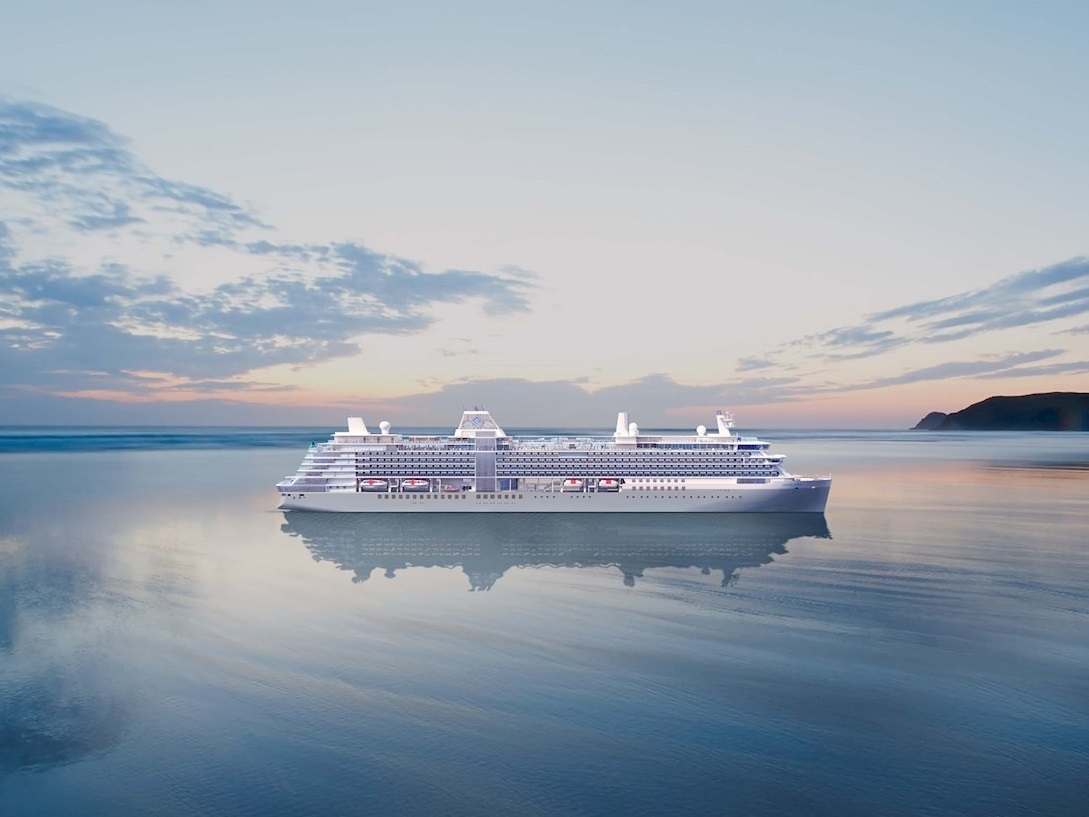
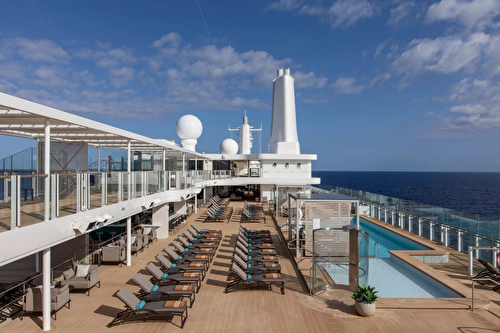
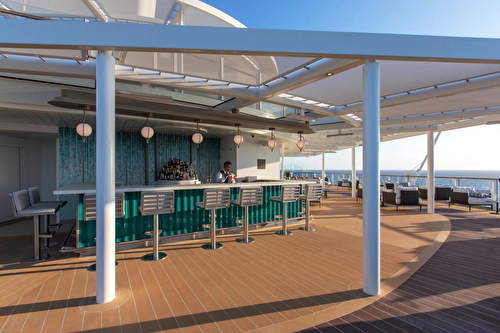
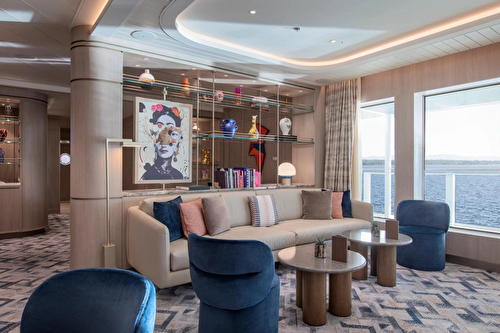
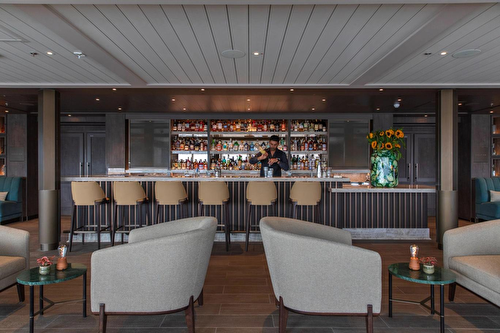
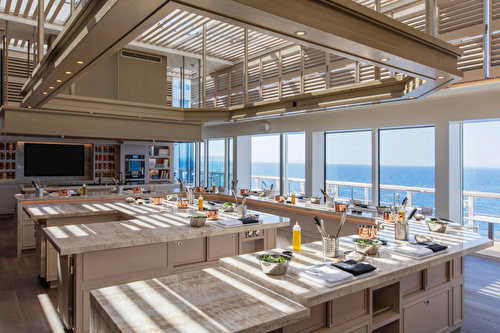
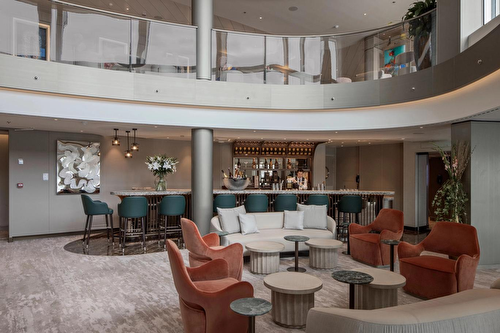
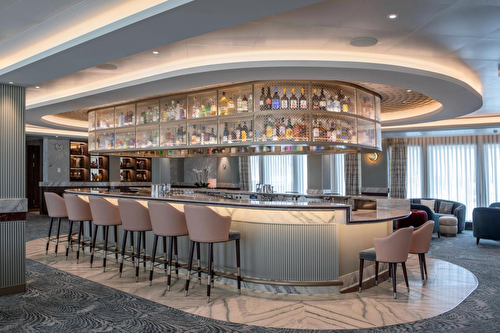
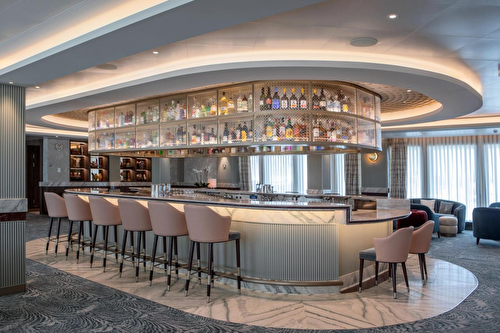
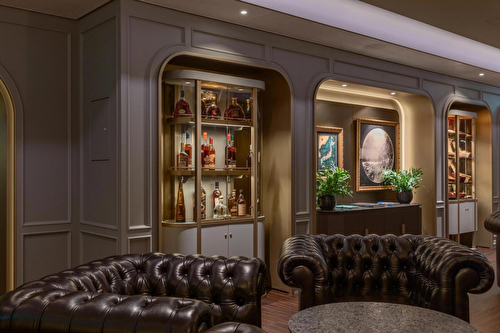
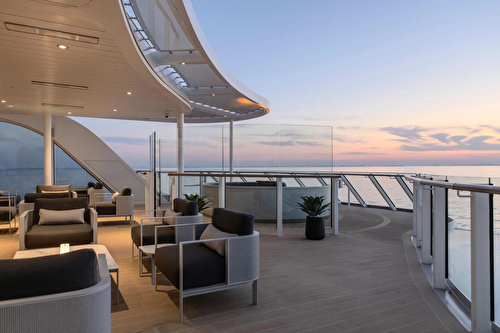
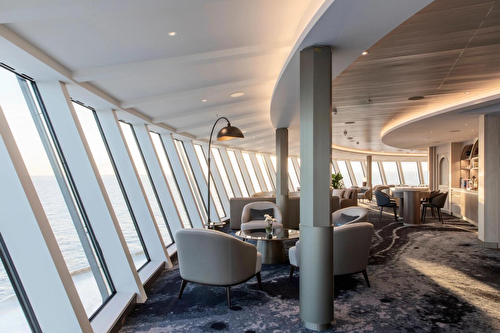
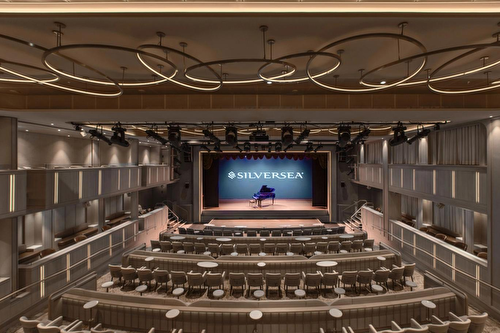
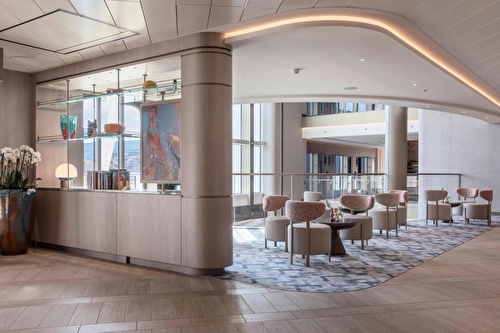

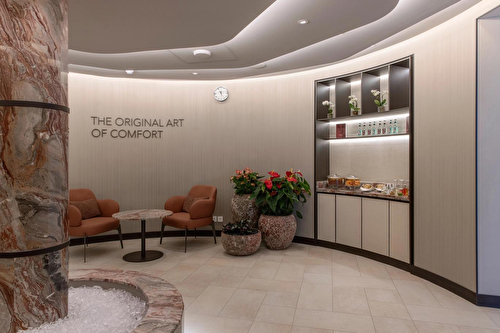
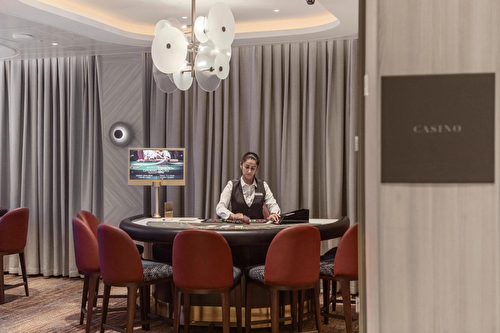
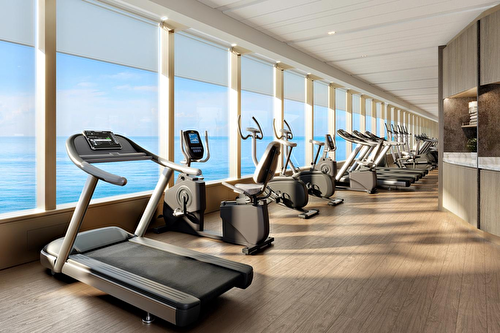
Introducing Silver Nova – the eleventh ship to join our fleet. Our newest vessel will join us in summer 2023, and will be a home away from home for up to 728 guests. Silver Nova’s innovative asymmetrical design introduces the world like never before, offering an immersive destination experience to our guests. With a gross tonnage of 54,700 tons she will offer a space-to-guest ratio of 75 GRT-per-passenger becoming one of the most spacious cruise ships ever built. What’s more, Silver Nova will be our most environmentally friendly, and thanks to her groundbreaking technological solutions, she will propel Silversea into a new era of sustainable cruising. It’s the Nova way to travel.
Boutique
Arts Cafe
Atlantide
Dolce
La Dame
La Terrazza
Spaccanapoli
The Grill
Venetian
Fitness Center
Jogging Track
Pool
Wellness Centre
Beauty Salon
Day Spa & Fitness Centre
Jacuzzi
Panoramic Lounge
Pool Deck
Spa
Swimming Pool
Whirlpool
Casino
Connoisseur Club
Connoisseur’s Corner
Observation Lounge
Panorama Lounge
Silver Note
Description
Introducing Silver Nova – the eleventh ship to join our fleet. Our newest vessel will join us in summer 2023, and will be a home away from home for up to 728 guests. Silver Nova’s innovative asymmetrical design introduces the world like never before, offering an immersive destination experience to our guests. With a gross tonnage of 54,700 tons she will offer a space-to-guest ratio of 75 GRT-per-passenger becoming one of the most spacious cruise ships ever built. What’s more, Silver Nova will be our most environmentally friendly, and thanks to her groundbreaking technological solutions, she will propel Silversea into a new era of sustainable cruising. It’s the Nova way to travel.
Other
Boutique
Food and Drink
Arts Cafe
Atlantide
Dolce
La Dame
La Terrazza
Spaccanapoli
The Grill
Venetian
Fitness
Fitness Center
Jogging Track
Pool
Wellness Centre
Relaxation
Beauty Salon
Day Spa & Fitness Centre
Jacuzzi
Panoramic Lounge
Pool Deck
Spa
Swimming Pool
Whirlpool
Entertainment
Casino
Connoisseur Club
Connoisseur’s Corner
Observation Lounge
Panorama Lounge
Silver Note
STATEROOMS