
Malaga (Costa del Sol) to Edinburgh (Leith)
- 23 Apr ‘27
- 27 nights
- Departing from Malaga
- Silver Wind

-
Inside price fromCall for price
-
Outside price fromCall for price
-
Balcony price fromCall for price
-
Suite price fromCall for price
YOUR ITINERARY
Malaga, Spain - Funchal (Madeira), Portugal - Ponta Delgada - Horta, Azores, Portugal - Santa Cruz das Flores, Azores - Ponta Delgada - Angra Do Heroismo, Azores, Portugal - Bantry - Cliffs of Moher - Kilronan, Aaran Islands - Skellig Islands - Ballinskelligs, Ireland - Cork, Ireland - Dublin, Ireland - Belfast - Iona - Lunga, Trishnish Island - Shiant Islands, Scotland - Loch Ewe - St. Kilda, Scotland, UK - Torshavn - Vestmanna, Faroe Islands - Lerwick, Shetland Islands United Kingdom - Fair Isle - Lindisfarne Island - Farne islands - Isle of May, United Kingdom - Edinburgh (Leith) United Kingdom
Situated on Spain’s Costa del Sol, Malaga is...
Situated on Spain’s Costa del Sol, Malaga is the region’s capital and a popular holiday destination. The city is known as the birthplace of Pablo Picasso and for the sweet Malaga dessert wines that come from the hilly vineyards just outside of town. Other points of interest include impressive Gothic architecture, the remains of a Moorish castle and several interesting museums. A pleasant town to explore, Malaga also serves as a popular starting point for trips to Granada and resorts along the Costa del Sol. Granada and the famed Alhambra are the region’s most outstanding attractions. Here, magnificent Moorish palaces and fortifications contrast sharply with Christian churches from Spain’s significant era of the 1492 Reconquest, in which King Ferdinand put an end to eight centuries of Moorish rule. Other worthwhile destinations from Malaga include such well-known resorts as Marbella and the white village of Mijas, located on the hillside above the coastal towns of Torremolinos and Fuengirola.
Bedecked with dramatic cliffs, fertile mountains and sun-gorged ...
Bedecked with dramatic cliffs, fertile mountains and sun-gorged beaches, Madeira is a lush, colourful island of plants, paradise and Portuguese-flavoured pleasures. Bathing in year-round sunshine, Funchal – the lowkey capital of Madeira – is perfect for slowing the pace, and toasting the thrilling scenery with a bottle of the island’s famous wine. Narrow, cobblestone streets line the old town, where whitewash buildings, iron-wrought balconies, and tiled patterns carry echoes of Lisbon. Rua de Santa Maria is the city’s oldest street, and the doors have been vividly painted by local artists.
Sit for a drink, to sample your choice of Madeira’s renowned wines – Boal is the ideal option for those with a sweeter tooth. You’ll also find Corpo Santo Chapel here, one of the few remaining buildings to have survived from the 15th century. Blossoming parks and gardens splash colour around, and the sweet smell of pollen lingers in Parque de Santa Catarina. Look out over Funchal harbour between the fountains and blooming flower beds, as ducks and swans enjoy leisurely days on the lake. Madeira Botanical Garden waits in the hills over the city, along with Palhero Garden – a sophisticated and elegantly landscaped English garden, 500 meters above sea level. For an even more dramatic view of this gorgeous setting, head up to Cap Girao – a rusty-red cliff with a cable car strung up to its sheer drop. The cliff falls away vertically to the vivid blue waters below. Or head down to the sea, to enjoy Funchal’s gorgeous pebble beaches rustling, framed by colossal, craggy cliffs.
Providing a gorgeous green welcome to sailors venturin...
Providing a gorgeous green welcome to sailors venturing on the long journey across the Atlantic, Ponta Delgada’s shoreline is a reassuring sight, as it emerges into view. Sat on São Miguel Island, the largest of Portugal’s Azores islands – which wait on an outpost of western Europe, some 1,100 miles from the mainland. Ponta Delgada is the island’s largest city, and a place of spectacular volcanic vistas, steaming hot springs and impressive landscaped gardens. View less
The city’s signature trio of arches welcomes you to Ponta Delgada, and its island of verdant volcanic contrasts. Wander between monochrome churches like the Gothic Church of St. Sebastian, and up to the Convent and Chapel of Our Lady of Hope – which houses the revered icon of Christ that is paraded through the streets annually, and believed to have miraculous powers by locals. Or, head for beaches offering sanctuary on charcoal-coloured sands, or the tropical António Borges Botanical Gardens, where tropical plants add extra shades to the Green Island’s scenery. Now extinct, the mighty Caldeira das Sete Cidades is a truly awe-inspiring sight – and the colossal collapsed volcanic caldera blooms with lush greenery and scattered wildflowers. The vast crater has been taken over by a glowing, picturesque lake, which reflects the blue sky above. A full three miles wide – and with a circumference of eight miles – it’s a vast panorama to take in. The Lagoa de Fogo – or Lake of Fire – is another of the island’s calderas – rise up to see the crumpled scenery encasing a beautiful lake. São Miguel Island’s geothermal activity has practical uses too, and you can harness the powers to unwind any tired muscles after a long day, by sinking into the hot springs of Poca Da Dona.
Far adrift, in the Atlantic’s vast sweep, H...
Far adrift, in the Atlantic’s vast sweep, Horta serves as a welcoming island respite for some truly epic ocean voyages. One of the most westerly parts of Europe, these Portuguese islands lie a full 1,100 miles from the coast of the mainland. The bustling marina here serves as the perfect stopover and a welcome respite for tired sailors and yachts embarking on transatlantic crossings. View less The colourful harbour is decorated with a multicoloured patchwork of their stories and flags, and adding to this massive, ever-growing mural is said to offer sailors protection while out on the seas. While Horta’s clientele may come and go with the waves, there’s nothing transient about the stunning volcanic cones and soaring wildflower-splashed hills that make up this beautiful Atlantic island pit-stop. Horta is the main city, and a charming welcome to dry land, as you step onto the pentagon-shaped island of Faial. On the frontier of continents, the violent meeting of the European and North American tectonic plates forged this beautiful archipelago – and the rich volcanic scenery here is ripe for exploration and adventure. The busy harbour lies before the dramatic backdrop of the neighbouring Pico Island’s cloud-wisped peak – head up to Espalamaca Lookout for the best view of Horta’s busy harbour and islands emerging nearby. Horta has a grand volcanic caldera of its own, and you can journey up through threads of cloud, to look down into the island’s immense, bowl-shaped crater. The Lighthouse of Ponta dos Capelinhos is an island icon, having survived 1957’s dramatic eruption. It now occupies a scenic location on a headland, surrounded by vast swathes of charred new land, which were churned out from the depths.
Providing a gorgeous green welcome to sailors vent...
Providing a gorgeous green welcome to sailors venturing on the long journey across the Atlantic, Ponta Delgada’s shoreline is a reassuring sight, as it emerges into view. Sat on São Miguel Island, the largest of Portugal’s Azores islands – which wait on an outpost of western Europe, some 1,100 miles from the mainland. Ponta Delgada is the island’s largest city, and a place of spectacular volcanic vistas, steaming hot springs and impressive landscaped gardens. View less
The city’s signature trio of arches welcomes you to Ponta Delgada, and its island of verdant volcanic contrasts. Wander between monochrome churches like the Gothic Church of St. Sebastian, and up to the Convent and Chapel of Our Lady of Hope – which houses the revered icon of Christ that is paraded through the streets annually, and believed to have miraculous powers by locals. Or, head for beaches offering sanctuary on charcoal-coloured sands, or the tropical António Borges Botanical Gardens, where tropical plants add extra shades to the Green Island’s scenery. Now extinct, the mighty Caldeira das Sete Cidades is a truly awe-inspiring sight – and the colossal collapsed volcanic caldera blooms with lush greenery and scattered wildflowers. The vast crater has been taken over by a glowing, picturesque lake, which reflects the blue sky above. A full three miles wide – and with a circumference of eight miles – it’s a vast panorama to take in. The Lagoa de Fogo – or Lake of Fire – is another of the island’s calderas – rise up to see the crumpled scenery encasing a beautiful lake. São Miguel Island’s geothermal activity has practical uses too, and you can harness the powers to unwind any tired muscles after a long day, by sinking into the hot springs of Poca Da Dona.
Angra do Heroísmo, or simply Angra, is a city and m...
Angra do Heroísmo, or simply Angra, is a city and municipality on Terceira Island, Portugal, and one of the three capital cities of the Azores.
Bantry is a town in the civil parish of Kilmocomoge in the...
Bantry is a town in the civil parish of Kilmocomoge in the barony of Bantry on the coast of West Cork, County Cork, Ireland. It lies at the head of Bantry Bay, a deep-water gulf extending for 30 km to the west. The Beara Peninsula is to the northwest, with Sheep’s Head peninsula to the southwest
“They go to the cliffs of Moher rising out ...
“They go to the cliffs of Moher rising out of the mist” … these words, written by great American poet Wallace Stevens, immortalised the cliffs of Moher in the best way imaginable. Romantic, wild, mysterious and beautiful, the cliffs of Moher are to Ireland what poetry is to prose. Located at the south western edge of County Clare, the 300-million-year-old cliffs stretch for 14 km. They are by far the country’s most visited landmark, welcoming an astonishing 1.5 million visitors annually. The vistas are exceptional, and understandably the pride of Ireland. On a good day you can see for miles: all the way to the Aran Islands, Galway Bay, the caves, O’Brien’s tower and of course the many miles of cliffs themselves. Birdwatchers will be doubly blessed, as Moher is designated as a UNESCO Geo Park and enjoys a Special Protection status. Get your binoculars at the ready as the cliffs are filled with thousands of Guillemots, Razorbills, Fulmars and Kittiwakes, as well as the largest mainland colony of Puffins. The beautiful cliffs are rich with history and legend. Two theories surround why Irish Politician Sir Cornelius O’Brien commissioned his eponymous tower in 1835. The most common belief is that so he (and others) could benefit from the stunning views the cliffs have to offer. The more salacious believe that the tower was a place away from prying eyes for O’Brien to bring his lady friends! Whatever the reason, today the viewing platform on the roof still offers one of the best coastal views there is.
If you have ever wanted to imbibe in the Celtic legends...
If you have ever wanted to imbibe in the Celtic legends of your past, then Kilronan is the answer to your prayers. Situated on the isle of Inishmore in the Aran Islands in County Galway, Cill Rónáin – the official Gaelic spelling – is all about history, spirituality and the kind of rejuvenation that can only be found on Irish soil. The first thing you should know about the Aran Isles is that they are exceptionally beautiful. View less National Geographic called them “one of the world’s top island destinations” and they are universally recognised as being the “islands of saints and scholars”. Windswept moors and craggy cliffs akin to a Victorian novel flank rolling seas that are Dantesque in their raw power. This is where nature comes home to roost (not to mention the 60,000 seabirds that call the islands their home). Inishmore (Inis Mor) is the biggest island of the archipelago, and as such has the most interesting Celtic history. Over 50 Celtic, Christian and pre-Christian sites are on Inishmore alone (with others on the other two islands that make up the rest of the archipelago). The most important of these site is perhaps the prehistoric fort of Dún Aonghasa, “the most magnificent barbaric monument extant in Europe”. Perched precariously on a 100-metre-high cliff, the fort dates back 3,000 years and is one of Ireland’s most ancient and sacred sites. Little is known of the history of Dún Aonghasa, not who Dún Aonghasa may have been, but a placing so close to the sea edge suggests ritualistic significance.
If you think that the Skellig Islands look famili...
If you think that the Skellig Islands look familiar, that’s because they are. The Skelling Michal towers set the scene in episodes seven and eight of the Stars Wars franchise, and local tourism has been feeling the force ever since. Aside from being in a galaxy far, far, away, the magnificent the Skellig Michael towers have been a UNESCO World Heritage Site since 1996. View less
The two Islands were (Great Skellig and Little Skellig) were part of a Gaelic Christian Monastic settlement from the 6th to the 12th century and the towers on Skellig Michael (Great Skellig) are a “unique example of an early religious settlement” (as well as being a final resting place for Jedis). The towers are surely the main attraction of the area and are simply fascinating. Built in a beehive shape to protect against the harsh elements, they use local stone and no mortar. Today, some 1,400 years later, they are still practically intact. There is also a graveyard on the island. Although be prepared for some walking; there are 618 steps winding up to the stone summit, which can get slippery in bad weather. However, like most things that require effort, you will be rewarded once you reach the top. The breathtaking views and photo opportunities are well worth it! Little Skelling is equally as important for birders too; the island is home to almost 30,000 pairs of gannets, the second largest colony of seabirds in the world. Guillemots, Puffins, Manx Shearwaters and Storm Petrels also nest on the island, making up the “Skellig Big Five”.
Colourful, quirky and refreshingly laid-back, the Rebel City is...
Colourful, quirky and refreshingly laid-back, the Rebel City is a bright and breezy blend of easily-walkable charm and trademark stunning Irish scenery. You may be surprised, as you stroll quietly humming streets, surrounded by the River Lee’s embrace, but this is the Republic of Ireland’s second largest city. Cork is more than happy to fly a little under the radar, however, and this beautiful city is an unbeatable starting point for exploring some of Ireland’s most dramatic western scenery.
Cork’s English Market is a delight – try out some of the best juicy Irish beef, seafood plucked the same morning, or the simple pleasure of a quiet cup of morning coffee. The Butter Museum is a low-key joy, and a charming ode to the simple dairy pleasure that forms one of Ireland’s most important exports. Cork is also a rising star in the craft beer world, and you can try the latest and greatest of the contemporary beers brewed here. Or settle into your pick of the vast choice of authentic, characterful pubs – where soupy pints of Guinness – perfectly poured with years’ worth of expertise and care – slip down a treat. Don’t be afraid to explore further afield. Postcard-perfect Cobh is close by, while Blarney Castle is a stout fairy-tale stronghold. Resign to the castle’s folklore – and dangle precariously upside down, while leaning out to kiss the famous Blarney Stone – said to bless you with the ‘gift of the gab,’ otherwise known as the ability to chat articulately. Glorious coastal vistas of emerald green fields, precipitously dropping to thrashing ocean below, await along Ireland’s scenic, windswept western coast.
Atmospheric cobbled streets, with buskers scraping fiddles a...
Atmospheric cobbled streets, with buskers scraping fiddles and characterful pubs inviting passersby inside, is Dublin in a snapshot. A city of irrepressible energy and lust for life, Ireland’s capital is as welcoming a place as you’ll find. Horse-drawn carriages plod along cobbled centuries-old streets, blending with an easy-going, cosmopolitan outlook. Known for its fun-filled gathering of pubs, any excuse works to enjoy a celebratory toast and chat among good company.
Home to perhaps the world’s most famous beer – slurp perfect pourings of thick, dark Guinness – cranked out for the city’s thirsty punters. Learn more of the humble pint’s journey at the Guinness Storehouse. Dublin has come along way since the Vikings established a trading port here, back in the 9th Century. In the time since, the city became the British Empire’s defacto second city, and the Georgian imprint still adds oodles of historic character. Learn of 1916’s Easter Uprising, when the Irish rebelled and established their independence here, as you visit the infamous, haunting Kilmainham Gaol. The uprising’s leaders were tried and executed in these dark confines. Dublin’s St. Patrick’s Cathedral has immense history below its steep spire, which dates back to 1191. There’s rich literary heritage to leaf through too, and the city’s streets were rendered vividly in James Joyce’s classic Ullyses. The Museum of Literature celebrates the full scope of Dublin’s lyrical talents. Trinity College also has a prestigious roll-call of alumni – visit to see the Book of Kells, a beautifully illustrated bible of the medieval era.
Reborn as a cool, modern city, Belfast has successfull...
Reborn as a cool, modern city, Belfast has successfully left its troubles behind, emerging as a hotbed of culture and architecture, where the comfort of a cosy pub is never far away. Take a voyage of discovery in its maritime quarter, home to a celebrated museum dedicated to the most famous ship ever built, which was constructed right here in the city’s shipyards. A walk across the Lagan Weir Footbridge brings you to Belfast’s fascinating Titanic District – an area of the city devoted to its rich ship-building heritage.
The state-of-the-art Titanic Museum brings the story of the doomed vessel to life, and is the largest museum dedicated to the infamously ‘unsinkable’ ship. Wind up a nautical-themed ramble along the Maritime Mile with a visit to SS Nomadic, the smaller cousin of the Titanic, and a ship which serves as a fascinating time capsule back to the pomp and grandeur of the Titanic, while also telling its own stories of service in both World Wars. There’s just enough time to give the 10-metre long Salmon of Knowledge sculpture a quick peck for luck, before continuing to explore. A stark barbed wire and graffitied sheet metal barrier marks an abrupt scar through the city’s residential areas. The Peace Line was constructed during the height of the Troubles, when Belfast was plagued by sectarian divisions between Protestants and Catholics. Nowadays, you can jump in a black taxi tour to see the colourful murals and living history of the walls, which stand as a stark reminder of the fragility of peace. After exploring the city’s historic divisions, a reminder of Belfast’s uniting creativity can be found at the Metropolitan Arts Centre – a seven-storey tall building, which invites light to gloriously cascade inside. The Cathedral Quarter is a cobbled blend of flower-adorned pubs, restaurants and theatres, and venues where music spills out onto the streets at night, and many a pint is cheerily shared.
If tiny islands that resonate with peace and tranquillity are y...
If tiny islands that resonate with peace and tranquillity are your idea of travel heaven, then welcome to Iona. Almost 200 miles east of Edinburgh, set in Scotland’s Inner Hebrides, this magical island has a spiritual reputation that precedes it. And luckily, more than lives up to. The island is miniscule. Just three miles long and only one and a half miles wide, this is not a place that hums with urban attractions. View less
120 people call Iona home (this number rises significantly if the gull, tern and Kittiwake population is added), although residential numbers do go up (to a whopping 175) in summer. The beautiful coastline is lapped by the gulf stream and gives the island a warm climate with sandy beaches that look more Mediterranean than Scottish! Add to that a green field landscape that is just beautiful, and you’ll find that Iona is a place that stays with you long after you leave. Iona’s main attraction is of course its abbey. Built in 563 by Saint Columbia and his monks, the abbey is the reason why Iona is called the cradle of Christianity. Not only is the abbey (today an ecumenical church) one of the best – if not the best – example of ecclesiastical architecture dating from the Middle Ages, but it also serves as an important site of spiritual pilgrimage. St. Martin’s Cross, a 9th century Celtic cross that stands outside the abbey, is considered as the finest example of Celtic crosses in the British Isles. Rèilig Odhrain, or the cemetery, allegedly contains the remains of many Scottish kings.
The stunning Isle of Lunga is the largest island in...
The stunning Isle of Lunga is the largest island in the Treshnish archipelago. With volcanic origin the isle was populated until the 19th Century, and remains of black houses can be seen around this magnificent coastal jewel. Abundant plant life and exotic birdlife are now the main inhabitants of the area. Fortunate visitors view the magnificent array of birds, especially the great puffins that breed on the islands plateau. One can sit within just a few feet away without disturbing the avian ambassador’s peace. View less
The 81 hectare island is home to many rare and endangered plants such as, primroses and orchids. Views over the landscape and across the ocean can be seen from the 300 foot high cliffs.
Loch Ewe is the only north facing Loch in Scotland, with an i...
Loch Ewe is the only north facing Loch in Scotland, with an interesting history and a fine scenic landscape this area has a true natural beauty. During WW2 the loch was a convoy collecting point with a strong naval presence; it was therefore protected by light and heavy aircraft guns, a boom net and mine defence system helped to shield this precious settlement
Gloriously remote, St. Kilda is an archipelago 50 miles...
Gloriously remote, St. Kilda is an archipelago 50 miles off the Isle of Harris. Although the four islands are uninhabited by humans, thousands of seas birds call these craggy cliffs home, clinging to the sheer faces as if by magic. Not only is St. Kilda home to the UK’s largest colony of Atlantic Puffin (almost 1 million), but also the world largest colony Gannets nests on Boreray island and its sea stacks. View less
The islands also home decedents of the world’s original Soay sheep as well as having a breed of eponymously named mice. The extremely rare St. Kilda wren unsurprisingly hails from St. Kilda, so birders should visit with notebook, binoculars and camera to hand. While endemic animal species is rife on the island, St. Kilda has not been peopled since 1930 after the last inhabitants voted that human life was unsustainable. However, permanent habitation had been possible in the Medieval Ages, and a vast National Trust for Scotland project to restore the dwellings is currently being undertaken. The islands even enjoyed a status as being an ideal holiday destination in the 19th century. Today, the only humans living on the islands are passionate history, science and conservation scholars. One of the caretakers even acts as shopkeeper and postmaster for any visitors who might like to send a postcard home from St. Kilda. It should be noted that St. Kilda is the UKs only (and just one of 39 in the world) dual World Heritage status from UNESCO in recognition of its Natural Heritage and cultural significance.
More than 600 miles (nearly 1,000 kilometres) from Denmark’...
More than 600 miles (nearly 1,000 kilometres) from Denmark’s west coast lie the Faroes, a triangle of eighteen windswept islands, seventeen of which are inhabited. Only 48,500 people plus some 70,000 sheep roam these remote lands. Much of the islands’ heritage reflects a medieval past, beginning with the arrival of farmers from western Norway who settled here in the 9th century. Evidence of this Scandinavian heritage is preserved through centuries of isolation; ancient structures can still be seen in villages clustered around old churches.
Surrounded by the mountains of Hægstafjall, Økslin,...
Surrounded by the mountains of Hægstafjall, Økslin, Loysingafjall, and Moskurfjall, Vestmanna sits quietly on the banks of Streymoy, on the North Atlantic Ocean. With 1,200 inhabitants, the colourful little village itself is lovely; a few shops and cafes selling locally made cakes and handicrafts, as well as the island’s native seafood soup dish. While those wishing to stretch their legs will enjoy the surrounding area for its stunning countryside, Vestmanna’s main attraction is beyond any doubt its bird cliffs. View less Youi don’t have to be a birder to appreciate these magnificent cliffs, although if you are the cliffs are the stuff of dreams. At almost 700-metres high (and six kilometres long), the cliffs rise steeply out of the water and are covered with tens of thousands of seabirds, zooming through the air, swooping into the water and nesting in the crevices. The near vertical cliffs are home to numerous species including kittiwakes, Common Guillemots, Black Guillemots and the oh so charismatic Atlantic Puffin. Visually, they are stunning: waterfalls thunder into the sea, cliff tops cut jagged lines into horizon and the whole landscape seems straight out of Jurassic Park. Dressed in a cloak of mist and emerald green moss, to say that the feeling is otherworldly is an understatement. To gage the true beauty of the region, one must take to the sea. The experience of sailing under the cacophonic cliffs, juxtaposed by the silence of calm caves is simply unforgettable.
Adrift between the Scottish and Norwegian coasts, the cragg...
Adrift between the Scottish and Norwegian coasts, the craggy Shetland Islands form the most northerly point of the British Isles. Sprawling across 100 islands, connected by sandy bridges and crisscrossing ferries, explore the highlights of this scenic archipelago outpost. With incredible Neolithic history, spanning 5,000 years of human heritage, these islands, which sit just shy of the Arctic Circle, are an isolated and immense treasure trove of history and thrilling scenery. Look out over dramatic coastline from atmospheric Iron Age towers.
Lying mid-way between Shetland and the Orkney islands, Fair Isle...
Lying mid-way between Shetland and the Orkney islands, Fair Isle is a tiny jewel in the sea. Famous for birds, knitwear and historic shipwrecks, the island offers a warm and friendly welcome to visitors. With a population of only around 70 people this island is truly a beautiful setting and is one of Britain’s most successful communities. View the cloudy light turquoise water as it drifts out to sea beneath the breath-taking Sheep Rock, rising over 100 metres, which is almost an isle of its own.
His favourite place in the UK to see nature at its best, is how ...
His favourite place in the UK to see nature at its best, is how David Attenborough described the Farne Islands. The scatter of small islands begins 2.4 kilometres (1.5 miles) off the Northumberland Coast. The islands are dolerite which formed from liquid rock cooling underground. Softer overlying rock has eroded to leave hard rounded columns and fissured dolerite cliffs. The treeless landscape makes viewing of the island wildlife and history easy, even from a boat. The Farnes are cared for by the National Trust.
The Isle of May in Scotland is owned and managed by Scottish Nat...
The Isle of May in Scotland is owned and managed by Scottish Natural Heritage as a National Nature Reserve and is an important breeding ground for approximately one-quarter of a million seabirds. In fact, over 40,000 puffin burrows have been counted as occupied. Not only kittiwakes, shags, eiders, and guillemots but also Razorbills, Arctic Terns, Sandwich Terns and Common Terns, Lesser Gulls, Herring Gulls and Great Black-backed Gulls nest here. View less
The island is located roughly four nautical miles off the coast of mainland Scotland and is used by biologists for surveying migrating passerines and for ringing breeding seabirds to better study their movements and breeding success. While hosting an impressive array and quantity of seabirds, the island itself is small at only 1.8 kilometers (1.1 miles) long, and less than half a kilometer (one-third of a mile) wide.
Edinburgh is to London as poetry is to prose, as Charlott...
Edinburgh is to London as poetry is to prose, as Charlotte Brontë once wrote. One of the world’s stateliest cities and proudest capitals, it’s built—like Rome—on seven hills, making it a striking backdrop for the ancient pageant of history. In a skyline of sheer drama, Edinburgh Castle watches over the capital city, frowning down on Princes Street’s glamour and glitz. But despite its rich past, the city’s famous festivals, excellent museums and galleries, as well as the modern Scottish Parliament, are reminders that Edinburgh has its feet firmly in the 21st century.Nearly everywhere in Edinburgh (the burgh is always pronounced burra in Scotland) there are spectacular buildings, whose Doric, Ionic, and Corinthian pillars add touches of neoclassical grandeur to the largely Presbyterian backdrop. Large gardens are a strong feature of central Edinburgh, where the city council is one of the most stridently conservationist in Europe. Arthur’s Seat, a mountain of bright green and yellow furze, rears up behind the spires of the Old Town. This child-size mountain jutting 822 feet above its surroundings has steep slopes and little crags, like a miniature Highlands set down in the middle of the busy city. Appropriately, these theatrical elements match Edinburgh’s character—after all, the city has been a stage that has seen its fair share of romance, violence, tragedy, and triumph.Modern Edinburgh has become a cultural capital, staging the Edinburgh International Festival and the Fringe Festival in every possible venue each August. The stunning Museum of Scotland complements the city’s wealth of galleries and artsy hangouts. Add Edinburgh’s growing reputation for food and nightlife and you have one of the world’s most beguiling cities.Today the city is the second most important financial center in the United Kingdom, and the fifth most important in Europe. The city regularly is ranked near the top in quality-of-life surveys. Accordingly, New Town apartments on fashionable streets sell for considerable sums. In some senses the city is showy and materialistic, but Edinburgh still supports learned societies, some of which have their roots in the Scottish Enlightenment. The Royal Society of Edinburgh, for example, established in 1783 “for the advancement of learning and useful knowledge,” remains an important forum for interdisciplinary activities.Even as Edinburgh moves through the 21st century, its tall guardian castle remains the focal point of the city and its venerable history. Take time to explore the streets—peopled by the spirits of Mary, Queen of Scots; Sir Walter Scott; and Robert Louis Stevenson—and pay your respects to the world’s best-loved terrier, Greyfriars Bobby. In the evenings you can enjoy candlelit restaurants or a folk ceilidh (pronounced kay-lee, a traditional Scottish dance with music), though you should remember that you haven’t earned your porridge until you’ve climbed Arthur’s Seat. Should you wander around a corner, say, on George Street, you might see not an endless cityscape, but blue sea and a patchwork of fields. This is the county of Fife, beyond the inlet of the North Sea called the Firth of Forth—a reminder, like the mountains to the northwest that can be glimpsed from Edinburgh’s highest points, that the rest of Scotland lies within easy reach.
YOUR SHIP - The Silver Wind
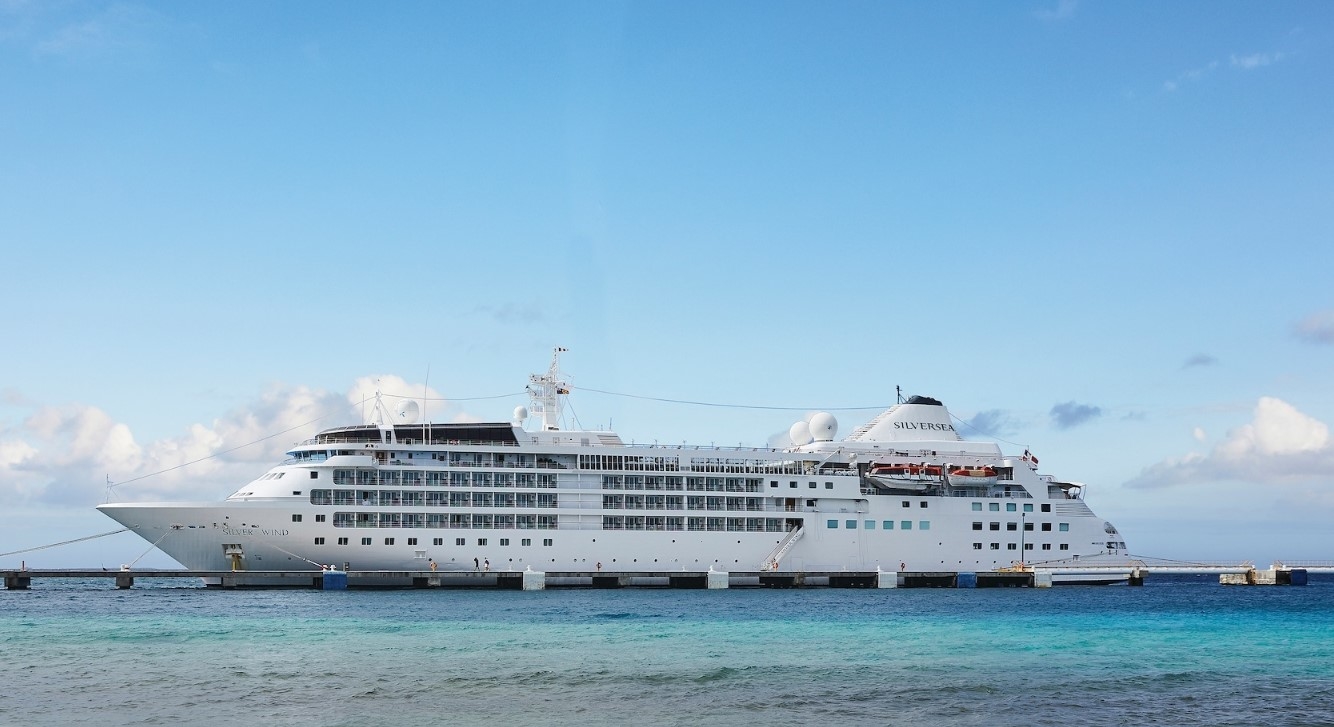
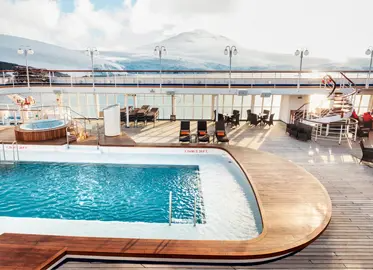
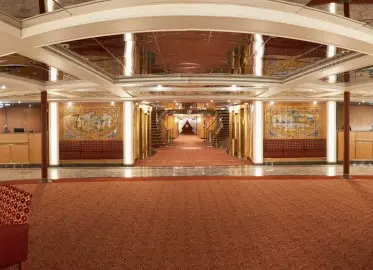
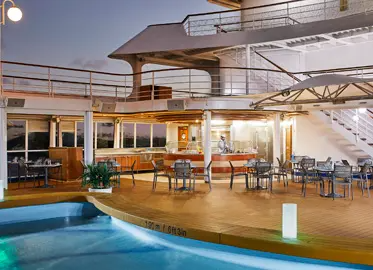
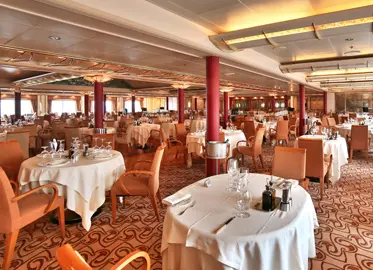
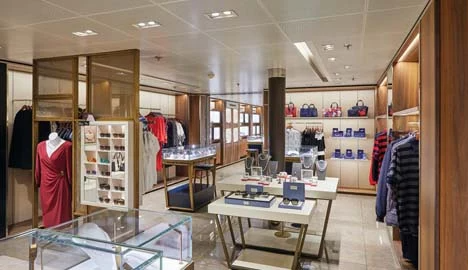

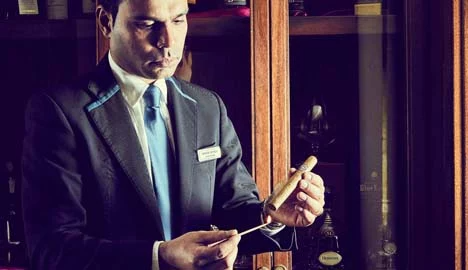
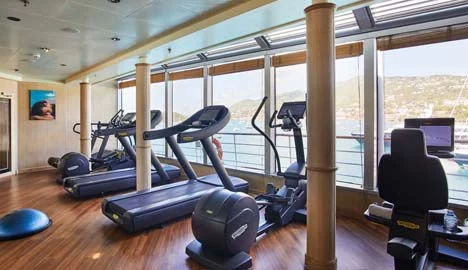
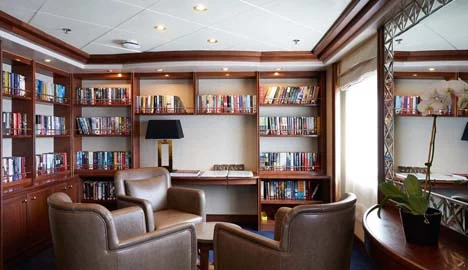
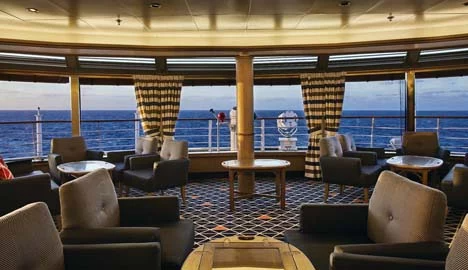
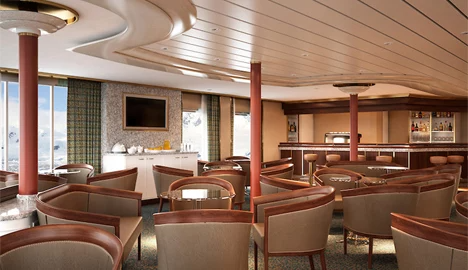

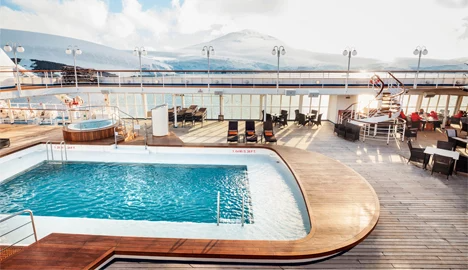
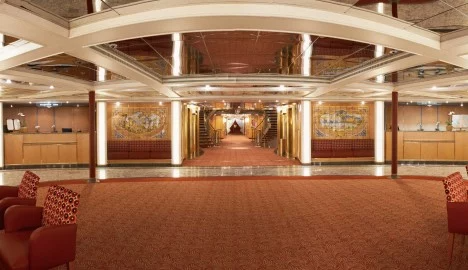
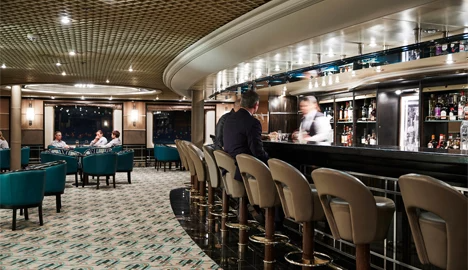
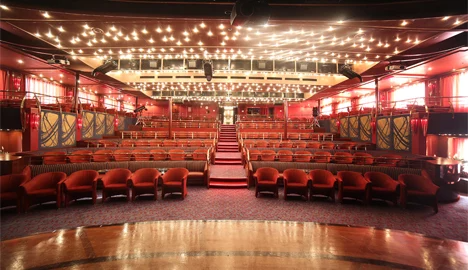

A major upgrade in December 2018 will see Silver Wind looking better than ever. A second refurbishment in summer 2020 will see her benefitting from a strengthened to ice-class hull and will make her one of the most adaptable ships in our fleet. Still timelessly elegant, still luxuriously relaxed, her improved cruising versatility means she is able to whizz from the Polar Regions at the ends of the earth to the iconic ports of the Mediterranean with fluid ease. So whether you want to get up close and personal to penguins in Antarctica or laze on the golden sands of the Caribbean, get ready for a wealth of diverse destination experiences, in traditional Silversea comfort.
24hr In-Suite Dining
Bar
Cafe
Grill
Le Champagne
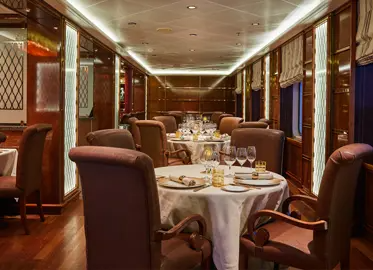
Saletta Restaurant
Boutique
Concierge
Conference Room
Duty-free shop
Future Cruise Sales
Guest Relations Office
Observation Lounge
Reception
Security Safe
Self Service Laundry
Shore Excursion Office
Aerobics
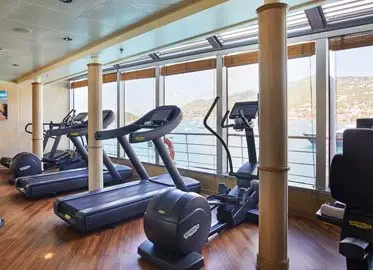
Fitness Center
Fitness Equipment
Jogging Track
Personal Training
Pilates
Yoga
Connoisseur Club
Dance Floor
Panorama Lounge
Show Lounges
Card Room
Library
Outdoor Pool
Beauty Salon
Facial Treatments
Manicures
Massage
Pedicures
Pool Deck
Sauna
Spa
Steam Room
Whirlpool
Internet Access Lounge
Internet Cafe
Satelite TV in Cabins
Description
A major upgrade in December 2018 will see Silver Wind looking better than ever. A second refurbishment in summer 2020 will see her benefitting from a strengthened to ice-class hull and will make her one of the most adaptable ships in our fleet. Still timelessly elegant, still luxuriously relaxed, her improved cruising versatility means she is able to whizz from the Polar Regions at the ends of the earth to the iconic ports of the Mediterranean with fluid ease. So whether you want to get up close and personal to penguins in Antarctica or laze on the golden sands of the Caribbean, get ready for a wealth of diverse destination experiences, in traditional Silversea comfort.
Food and Drink
24hr In-Suite Dining
Bar
Cafe
Grill
Le Champagne
Saletta Restaurant
Other
Boutique
Concierge
Conference Room
Duty-free shop
Future Cruise Sales
Guest Relations Office
Observation Lounge
Reception
Security Safe
Self Service Laundry
Shore Excursion Office
Fitness
Aerobics
Fitness Center
Fitness Equipment
Jogging Track
Personal Training
Pilates
Yoga
Entertainment
Connoisseur Club
Dance Floor
Panorama Lounge
Show Lounges
Recreational
Card Room
Library
Outdoor Pool
Relaxation
Beauty Salon
Facial Treatments
Manicures
Massage
Pedicures
Pool Deck
Sauna
Spa
Steam Room
Whirlpool
Technology
Internet Access Lounge
Internet Cafe
Satelite TV in Cabins
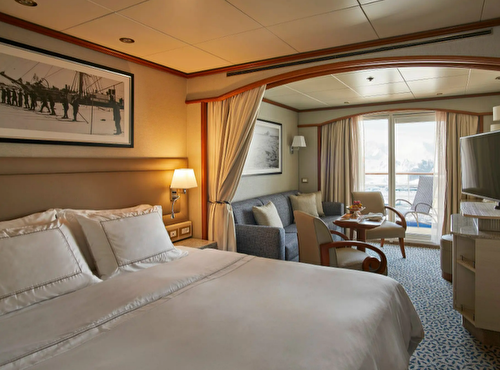
STATEROOMS